
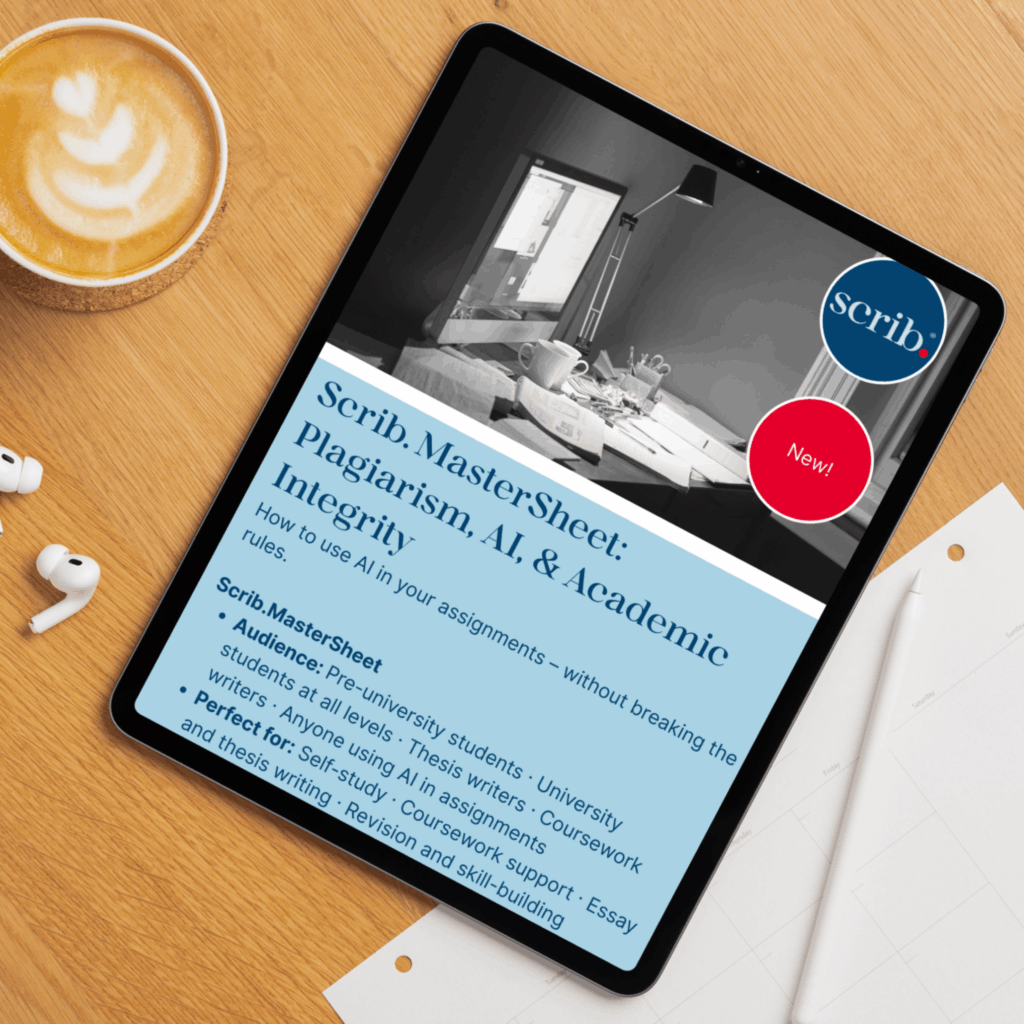
MasterSheet: Plagiarism, AI & Academic Integrity
- Write with integrity
- Use AI safely
- Avoid accidental plagiarism
AI can help you plan, draft, and improve your writing – but one small misstep can count as plagiarism. This MasterSheet shows you exactly how to use AI responsibly, avoid common errors, and protect your academic integrity.
You’ll finish with clarity, confidence, and a repeatable process for safe, responsible AI use.
Why it matters
Plagiarism can cost you more than just marks – it affects your credibility, your academic record, and even your visa status in some countries.
This MasterSheet gives you the tools to protect your integrity, your grades, and your peace of mind.
You’ll finish with clarity, confidence, and a repeatable process for safe, responsible AI use.
Get the complete guide + all bonus PDFs.
About this MasterSheet
Most students use AI – but very few understand what counts as allowed use. The rules are unclear, the grey areas are huge, and even innocent mistakes can be treated as plagiarism.
This MasterSheet gives you the clarity you need to stay safe, confident, and original.
What you’ll learn:
- What counts as plagiarism (and what doesn’t, including AI use)
- How to use AI tools for planning, drafting, and checking without crossing the line
- How to paraphrase, quote, summarize, and cite correctly
- Clear examples of safe vs. unsafe AI use in essays, reports, and code
- Discipline-specific examples (Humanities, Social Sciences, STEM, Business)
- What to do if you’re accused of plagiarism
- Scrib. Ethics Self-Check – your quick self-audit for originality
- How to write your AI use statement
- How to avoid grey-area mistakes that look like plagiarism but aren’t
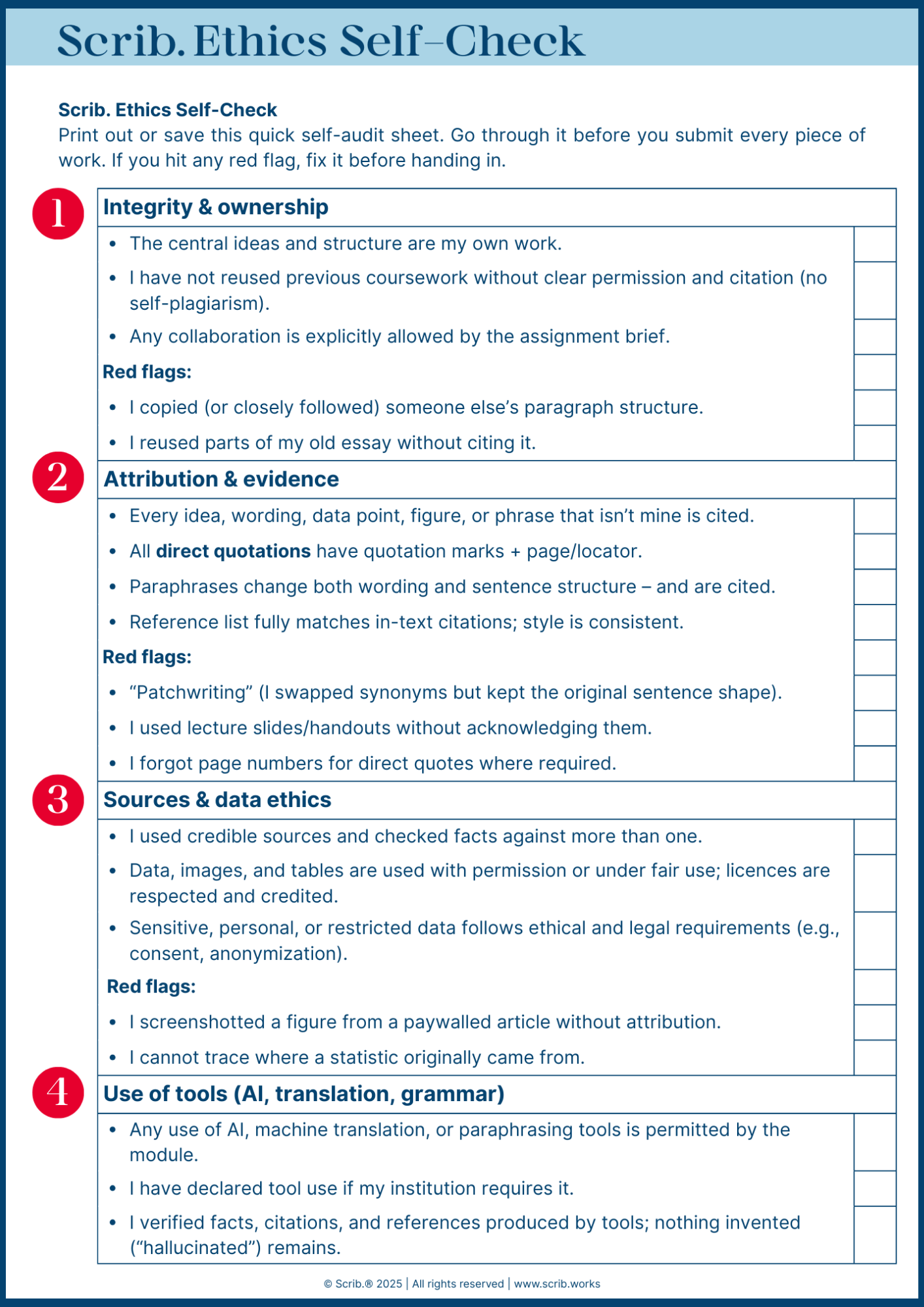
30 pages that give you:
Clear definitions
Direct copying, patchwriting, paraphrasing without citation, self-plagiarism, AI-assisted plagiarism, common knowledge and more.
The plagiarism vs. not plagiarism table
A fast, visual guide showing exactly what counts as plagiarism in different situations.
AI & academic integrity
How universities define “safe AI use,” with concrete examples you can follow.
The line students cross without realizing
Includes the behaviour that feels harmless but is treated as plagiarism by most universities.
(Example: letting ChatGPT rewrite a paragraph you drafted quickly on your phone. If you can’t explain every sentence, most universities treat this as plagiarism.)How universities define “safe AI use,” with concrete examples you can follow.
Your academic integrity action plan
What to do – and what to avoid – if someone accuses you of plagiarism.
Real student examples
Side-by-side “unsafe” and “safe” versions to show you exactly what to do.
Your originality toolkit
A step-by-step process for staying safe, including your AI Use Statement template.
Who is this MasterSheet for?
Pre-university, undergraduate & postgraduate students
who want to use AI confidently without risking their degree.
International students
who want clear, practical explanations of plagiarism in plain English.
Teachers & supervisors
who want an accurate, ready-to-use resource to guide students.
Anyone using AI for study or writing
who wants to stay on the right side of academic integrity.